
If you’re targeting the keyword ui and ux design, you’re probably building a website, a mobile app, or a digital product—and you want it to look premium and perform. That’s exactly what ui and ux design is about: combining the user interface (UI) and the user experience (UX) to create a product that feels effortless, builds trust fast, and drives action.
A strong ui and ux design strategy improves more than visuals. It impacts conversion rate, retention, engagement, credibility, and even your support workload. In competitive markets, good ui and ux design is often the difference between a product that grows and a product that gets ignored.
If you want a proven partner for ui and ux design, start with Iceberg Agency and explore our projects to see real UI/UX outcomes.
What UI and UX Design Really Means (And Why It’s Not “Just Design”)

Many teams think ui and ux design is only about screens, colors, and “making it modern.” But real ui and ux design is a system: it connects human behavior, business goals, information architecture, and interface patterns into a clear journey.
- UI (User Interface) = layout, typography, color, spacing, components, visual hierarchy, UI kit, design system
- UX (User Experience) = user journey, user flows, information architecture, usability, accessibility, onboarding, cognitive load, friction reduction
The strongest products don’t treat UI and UX separately. They build ui and ux design as one discipline: clarity first, consistency always, and conversion by design.
Why UI and UX Design Directly Improves Business Outcomes
Here’s the truth: most “low conversion” problems are ui and ux design problems. Users rarely tell you “your hierarchy is weak.” They just leave.
A high-quality ui and ux design improves:
1) Conversion rate optimization (CRO)
Clear call-to-action placement, better page structure, better microcopy, fewer steps in critical flows—this is ui and ux design powering CRO.
2) Trust and credibility
Modern, consistent UI builds trust fast. A premium ui and ux design uses clean typography, spacing, contrast, and predictable patterns that feel professional.
3) Retention and engagement
Better onboarding, clearer navigation, better feedback states—strong ui and ux design reduces friction and increases retention.
4) Lower bounce rate and better behavior signals
When pages are readable and navigation is intuitive, users stay longer. Good ui and ux design supports engagement.
5) Faster development and fewer redesign cycles
A component-based design system reduces dev confusion and rework. Strong ui and ux design makes delivery smoother.
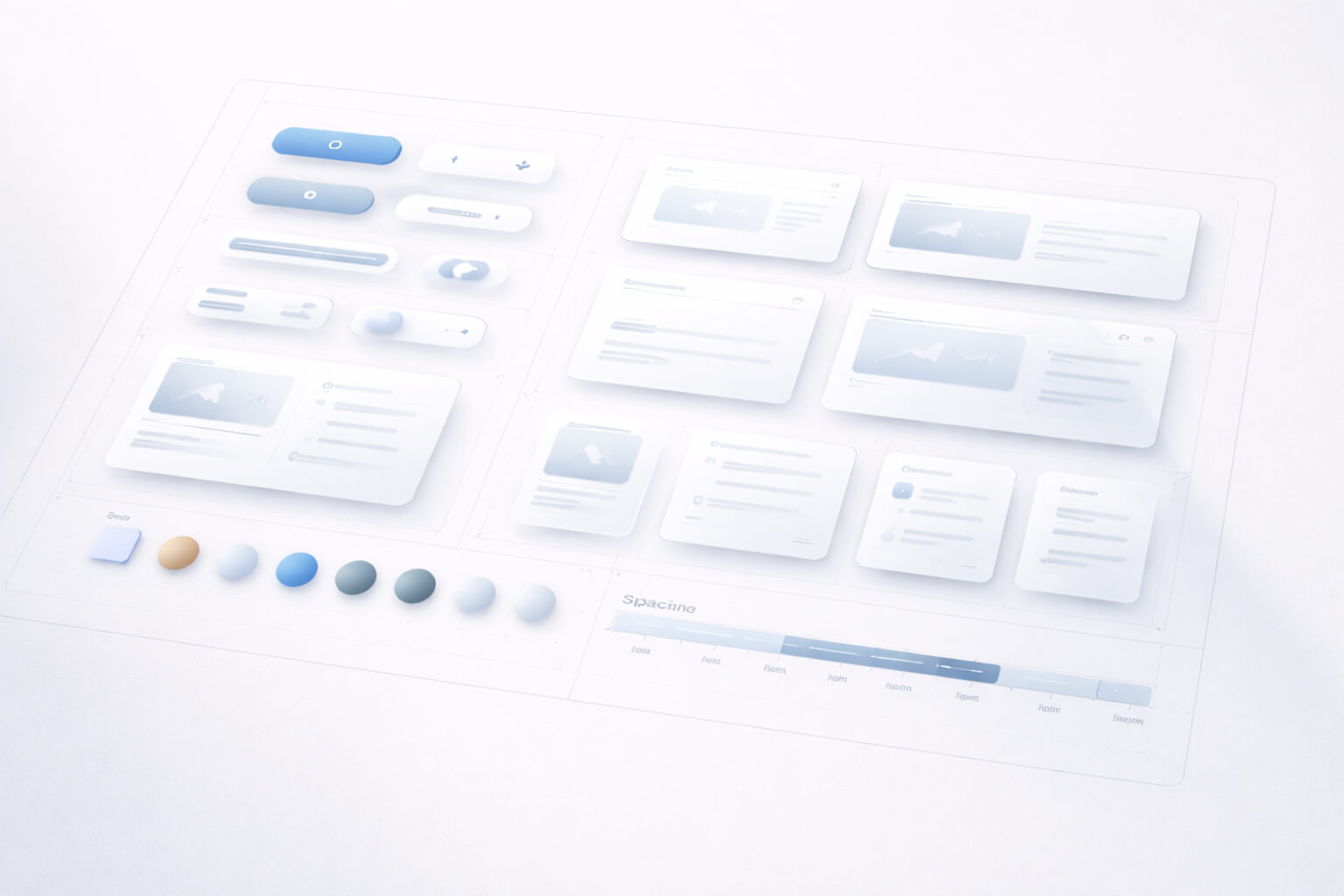
Want to see what premium ui and ux design looks like? Check our projects.
UI and UX Design Core Principles (The Foundations of Great Experience)
If you want high-performing ui and ux design, these principles matter more than trends:
Clarity over creativity
The best ui and ux design reduces “thinking.” Users should understand the next step instantly.
Visual hierarchy
Hierarchy guides attention. Great ui and ux design makes the main action obvious: primary CTA, supporting info, secondary actions.
Consistency and patterns
Consistency reduces cognitive load. Strong ui and ux design uses a component library and stable patterns across screens.
Accessibility and inclusivity (WCAG thinking)
Readable typography, contrast, tap targets, keyboard navigation—accessible ui and ux design is better for everyone.
Feedback and states
Empty states, loading states, error states, success states—great ui and ux design never leaves users guessing.
Mobile-first experience
Most traffic is mobile-first in many markets. Strong ui and ux design must prioritize touch-friendly layouts and responsive design.
The UI and UX Design Process (How Professionals Build Great Products)

A professional ui and ux design process is structured. It prevents guesswork, saves time, and produces scalable results.
Step 1: Discovery and UX audit
A serious ui and ux design team starts with:
- user needs and personas (or proto-personas)
- competitor research and benchmarking
- analytics review (drop-offs, funnels, heatmaps when available)
- stakeholder interviews
- heuristic evaluation (usability review)
Entities/LSI: UX audit, heuristic analysis, user research, product strategy, design thinking
Step 2: Information architecture and user flows
Before UI polish, ui and ux design defines:
- sitemap (website) or navigation map (app)
- user flows for key tasks (signup, checkout, booking, contact)
- journey maps and edge cases
Entities/LSI: information architecture, user flow, journey mapping, task analysis
Step 3: Wireframes and interaction design
Wireframes validate structure and hierarchy. Strong ui and ux design uses wireframes to test logic early:
- layout structure
- CTA placement
- content hierarchy
- interaction patterns
Entities/LSI: wireframes, interaction design, low-fidelity prototype, IA
Step 4: UI design (high-fidelity)
Now the interface becomes real:
- typography scale
- spacing system (8pt grid is common)
- color system
- iconography
- components (buttons, inputs, cards, navigation)
- responsive breakpoints
Entities/LSI: UI design, visual design, typography, spacing, design tokens
Step 5: Prototyping and usability testing
A strong ui and ux design process includes:
- clickable prototypes (Figma prototype)
- usability testing sessions (even 5 users reveal a lot)
- iteration based on feedback
Entities/LSI: usability testing, prototype testing, UX research
Step 6: Design system + developer handoff
Professional ui and ux design includes:
- component library
- UI states (hover/active/disabled/error/loading)
- design specs and guidelines
- assets export
- handoff workflow
Entities/LSI: design system, component library, handoff, Figma, UI kit
UI and UX Design Deliverables You Should Ask For
If someone sells “ui and ux design” but only gives you PNG files, that’s a red flag.
A real ui and ux design package should include:
- UX audit (if redesign)
- sitemap / navigation structure
- user flows (core + edge cases)
- wireframes (key screens)
- high-fidelity UI screens
- interactive prototype
- design system basics (tokens + components)
- states (empty, loading, error, success)
- dev handoff notes
This deliverable set is what allows ui and ux design to be implemented correctly.
UI and UX Design Mistakes That Kill Performance
Most bad results come from the same errors:
Mistake 1: UI-first, UX-later
Pretty screens don’t fix broken journeys. True ui and ux design starts with structure.
Mistake 2: Too many steps in critical flows
Long forms, complex onboarding, slow checkout. Strong ui and ux design simplifies.
Mistake 3: Weak content hierarchy
If users can’t scan, they won’t convert. Strong ui and ux design supports scanning behavior.
Mistake 4: Inconsistent UI across screens
Different button styles, random spacing, inconsistent typography. Poor ui and ux design destroys trust.
Mistake 5: Ignoring microcopy
Button labels and helper text matter. Great ui and ux design uses microcopy to reduce doubt.
Mistake 6: No accessibility thinking
Bad contrast, small tap targets. Great ui and ux design respects accessibility.
UI and UX Design for Websites, Apps, and SaaS (What Changes)
The principles are the same, but the focus shifts:
UI and UX Design for websites
Website ui and ux design priorities include:
- clear positioning and value proposition
- conversion sections (CTA, forms, trust signals)
- SEO-friendly structure (headings, content blocks)
- speed and readability
- internal linking clarity
LSI: landing page design, conversion funnel, trust signals, responsive website
UI and UX Design for mobile apps
App ui and ux design focuses on:
- onboarding flow
- navigation clarity
- retention loops and habit formation
- gestures and micro-interactions
- empty/error/loading states
LSI: mobile UX, onboarding, micro-interactions, retention
UI and UX Design for SaaS products
SaaS ui and ux design often requires:
- dashboards with clear hierarchy
- complex workflows simplified
- role-based UI logic
- design systems for scaling features
- data visualization clarity
LSI: SaaS UX, dashboard design, product design, data visualization
LSI Keywords and Entities to Strengthen “UI and UX Design” SEO
To rank better for ui and ux design, include relevant entities and LSI terms naturally (not stuffed). Here are strong ones you can integrate:
- user interface (UI), user experience (UX)
- product design, digital product design
- UX research, usability testing, heuristic evaluation
- wireframes, prototypes, interaction design
- information architecture, user journey, user flow
- design system, UI kit, component library, design tokens
- responsive design, mobile-first, accessibility (WCAG)
- conversion rate optimization (CRO), landing page optimization
- microcopy, onboarding, retention, engagement
- Figma (as a tool entity), prototype, handoff
(Your article already includes many of these—good.)
Why Iceberg Agency Is a Strong Partner for UI and UX Design
If you want ui and ux design that looks premium and performs, you need a partner that builds systems, not random screens. Iceberg Agency is built for teams that care about clarity, consistency, and execution quality.
Start here: Iceberg Agency
See proof here: our projects
A strong ui and ux design partner should show real work, strong process, and consistent quality. That’s exactly what you can validate through our projects.
Conclusion: UI and UX Design Is a Growth Lever
In competitive markets, ui and ux design is not optional. It’s the growth lever that improves clarity, reduces friction, increases trust, and drives conversions.
If you’re ready to upgrade your ui and ux design, explore Iceberg Agency and review our projects to see what premium UI/UX can look like when it’s done right.